Strada Signorino, 3 - Tel. +39 0761308688 - Cell. +39 3398089178 - info@poderedellarco.com - www.poderedellarco.com
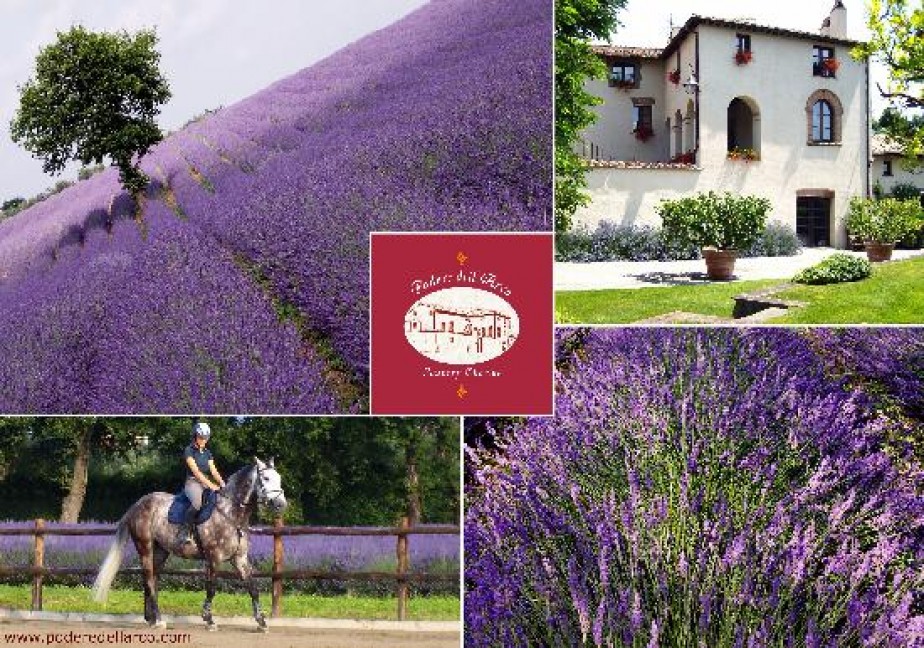
This ancient farmhouse dates back to the 15th century and, for a long time, was the home of a small community of working friars.
In the 19th century, the property belonged to the Cardinal Carlo Cristofori who put it at the disposition of the Church for the production of fruit and vegetables, the rearing of livestock, and the provision of sustenance for the poor, orphans, and prisoners.
Afterwards, the farmhouse and some of the surrounding lands became acquired by a Viterben family that made use of the work of mezzadri.
The story of the family Grani crossed that of the podere in 1963 when Marcello Grani acquired the frateria and the first piece of land. In the course of time, Grani succeeded in acquiring the surrounding lots until finally constructing a farm of 30 hectares. In the 70s, Grani chose to give in usufruct the farmhouse to the family of mezzadri that had been living there for generations.
Arround 2003, the frateria, with the end of the usufruct, returned to the Grani family, who decided to restructure it in order to host tourists. After years of difficult and detailed restoration, the house opened its doors to the first guest on the 19th of May, 2007.
We executed a detailed restoration, consolidating, cleaning, and fixing while ensuring that the character and the aura of the house remained the same.
The reception was placed in the old cowshed which was restructured in a very conservative manner. One can still admire the splendid trough of peperino stone and, on the stone walls, the rings to which the cows were tied.